
Power in the data centre is one of the most confusing and expensive parts of choosing a colocation provider. Volts, amps, phases, redundancy, kW vs. kVA, etc. Providers rarely quote power the same way. Too often, customers pay for unused capacity, or they underprovision and later face costly upgrades, additional circuits, new PDUs, and complicated contracts with no clear exit strategy.
How did we get here? In the old telcom days, power was simple. You asked for 20 amps and the only real question was AC or DC. In North America, the default assumption was 120V, a standard that carried forward significant inefficiencies for decades. While that tradition is finally fading, many providers still default to lower voltage or inconsistently delivered power.
Why Voltage Matters
Using the highest practical voltage is widely recognized as the most efficient way to deliver power. Higher voltage means lower current for the same amount of power, which reduces energy losses, allows for smaller wiring and transformers, and improves overall Power Usage Effectiveness (PUE).
Most modern IT equipment operates across a wide range, typically 100V to 250V to support global power standards (including North America’s 120/208V, Japan’s 100/200V, and the 230V used in most other countries). This means you no longer have to worry about equipment compatibility. In fact, your gear will generally run more efficiently at higher voltages, lowering your overall power consumption.
Coloware’s Approach to Power Delivery
At Coloware, we’ve designed our power offering with both efficiency and long term flexibility in mind. We support both 208V and 240V 3-phase power delivery. In both cases, we over provision circuits so customers can grow in increments without needing breaker changes, PDU upgrades, or infrastructure modifications. Whether you start at 5kW or scale toward higher densities, the capacity is already in place.
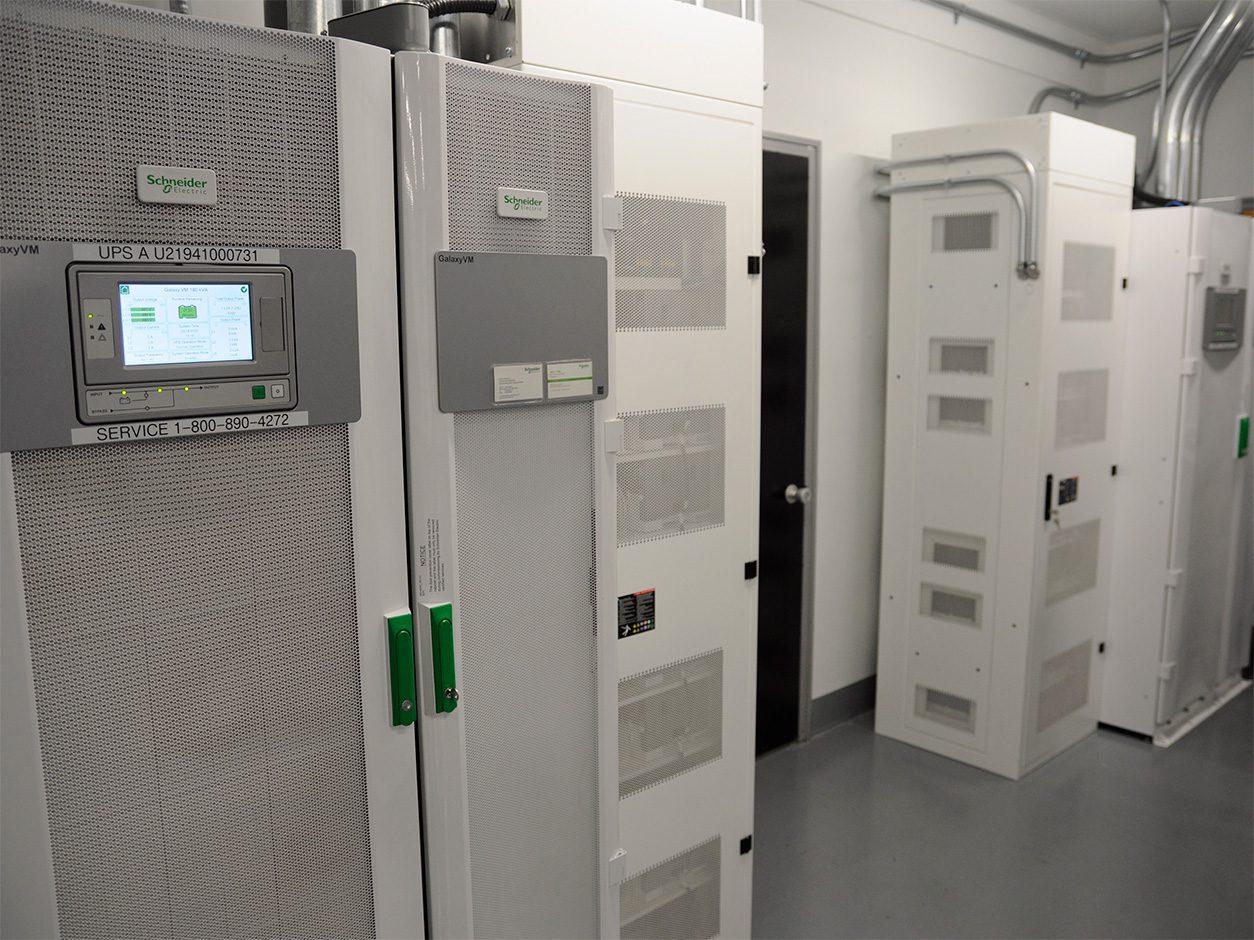
Our deployments include redundant UPS systems and generators, giving you reliable A+B power protection. We price power based on a minimum commitment and allow you to scale as you grow.
What’s on the Horizon: Higher Voltage DC
Looking ahead, the industry is moving toward even higher voltage distribution. 800V DC is emerging as a promising innovation, particularly for high-density and AI-driven workloads. Higher voltage DC distribution can further reduce conversion losses, simplify cabling, improve efficiency at scale, and better support the massive power densities required by next generation computing.While 208V and 240V AC remain the practical standards today, forward thinking providers are already preparing infrastructure that can accommodate these higher voltage DC advancements when they become more widely adopted.
How to Compare Power Offerings
When evaluating colocation providers, don’t just look at the headline price. Ask these key questions:
- What is the maximum available power per cabinet?
- What is the minimum power commitment?
- How will pricing change if I need to expand?
- What does redundancy actually include? (Different breaker feeds? Redundant UPS? Generators? Substations?)
Making Power Simple
Power shouldn’t be a source of confusion or unexpected costs. At Coloware, we focus on delivering efficient, flexible, and transparent power solutions so you can focus on your business instead of managing infrastructure headaches. If you’re comparing options or planning a deployment, we’re happy to walk through the details and show you exactly how our approach works in practice.